

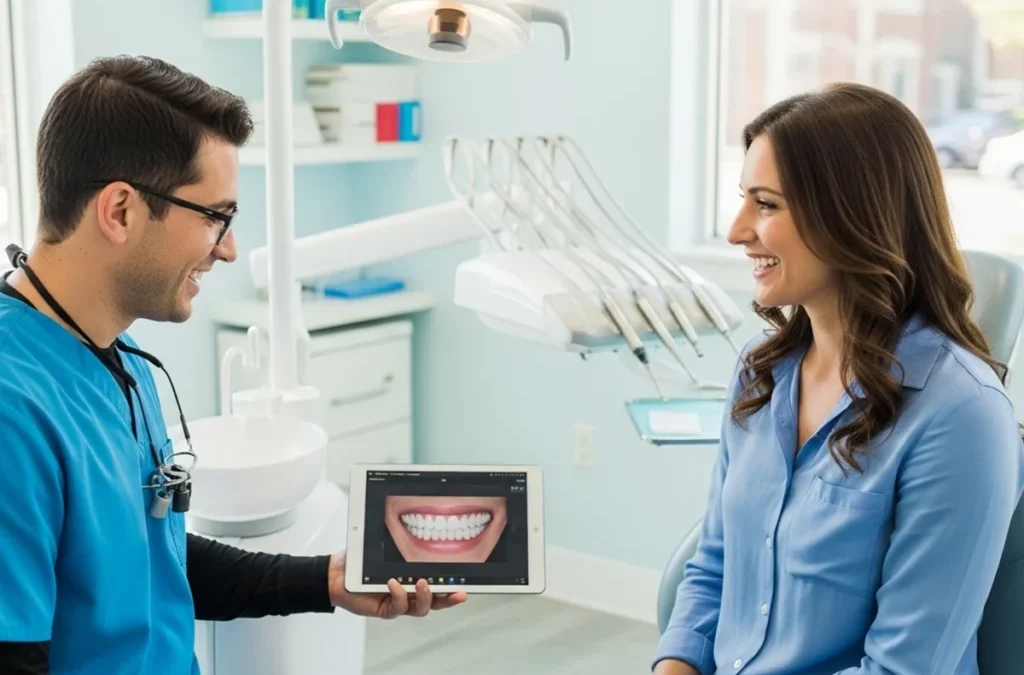

Good oral hygiene depends on more than brushing twice a day and booking a check-up when something feels wrong. For many people in London, the real challenge is managing the gradual build-up of plaque, surface staining, and bacteria in areas that daily brushing does not fully reach. That is where airflow treatment has gained attention. Used in dental practices as part of professional hygiene care, airflow combines a controlled stream of air, warm water, and fine powder particles to remove soft deposits from the teeth and around the gumline. It is widely used as a gentler alternative to older polishing methods and, in suitable cases, as a practical addition to a regular hygiene appointment.
A cosmetic dentist from MaryleboneSmileClinic says that patients often ask whether airflow stain removal London is mainly about appearance, when in reality its value often starts with hygiene. By lifting plaque biofilm and fresh surface stains efficiently, it can help people maintain cleaner tooth surfaces with less discomfort than they expect from a professional cleaning visit. That matters in a city where coffee, tea, red wine, and busy work routines can quickly undermine otherwise decent home care.
The reason airflow stands out is not that it replaces every other dental cleaning method. It does not. Dentists and hygienists still assess each patient individually and may combine airflow with hand scaling or ultrasonic tools where harder calculus is present. The advantage is that it addresses one of the most common oral health problems: soft biofilm that forms continuously and contributes to gum irritation, unpleasant breath, and staining. Instead of treating hygiene as a purely reactive measure, airflow supports a more preventive approach. For London patients balancing commuting, social habits, and packed schedules, that preventive angle is often what makes the difference between stable oral health and a cycle of repeated problems.
It Removes Plaque Biofilm More Thoroughly From Difficult Areas
The first major benefit of airflow is its ability to remove plaque biofilm from places that are harder to clean thoroughly with a toothbrush alone. Biofilm is a sticky layer of bacteria that forms naturally on the teeth, around the gums, and in gaps between teeth. If it is not disrupted regularly, it contributes to gum inflammation and can increase the risk of decay. Even patients who are careful at home often miss certain areas, particularly around crowded teeth, orthodontic attachments, fixed retainers, implants, and the back molars. Airflow is useful because its fine spray can reach contours and niches that are awkward to polish with traditional rubber cups.
This matters because oral health problems often begin in precisely those neglected spaces. Bleeding gums do not always mean someone is failing to clean their teeth; they often mean the wrong areas are being missed repeatedly. A professional airflow treatment can strip away the soft bacterial film that fuels irritation before it hardens or leads to more persistent gingivitis. For patients in London who wear aligners, braces, or bonded retainers, this can be particularly relevant. These appliances create additional surfaces where plaque can collect and where standard cleaning becomes more technical than most people realise.
There is also a behavioural benefit. When patients leave a hygiene appointment with cleaner tooth surfaces, they are often better able to maintain them at home because brushing and interdental cleaning feel more effective. Smooth, plaque-free surfaces make it harder for new deposits to cling as quickly. That does not eliminate the need for daily oral care, but it can improve the starting point. In practical terms, airflow helps reset the mouth to a cleaner baseline. Once that baseline is established, home care products such as fluoride toothpaste, interdental brushes, and floss can do their job more efficiently between appointments.
It Helps Reduce Surface Staining Without Aggressive Abrasion
A second way airflow improves oral hygiene is by dealing effectively with external staining that can make teeth look and feel less clean. In London, common habits such as drinking coffee on the way to work, frequent tea, red wine with meals, and occasional smoking or vaping all contribute to superficial discolouration. These stains do not necessarily mean the tooth structure is unhealthy, but they often sit within the same film and deposits that gather over time. When teeth carry visible stain, people sometimes brush harder at home in an attempt to restore brightness, which can be counterproductive if it causes gum recession or enamel wear over time.
Airflow addresses this more sensibly by lifting fresh and moderate surface staining in a controlled clinical setting. Because the system uses a fine powder with water and air rather than relying on heavy friction, many patients find it more comfortable than older polishing methods. The improvement is not the same as tooth whitening, and it should not be presented as such. Whitening changes the internal shade of the teeth, while airflow mainly removes what has accumulated on the outside. Even so, the visual effect can be noticeable, particularly for people whose teeth are dulled by daily staining rather than intrinsically dark.
The oral hygiene value goes beyond appearance. Stain tends to cling where plaque and soft deposits are present, so cleaner-looking teeth often reflect genuinely cleaner surfaces. When surface deposits are removed properly, the mouth feels fresher and it becomes easier to monitor any real changes in tooth colour, gum health, or enamel condition. This can also prevent the build-up of frustration that leads some patients to overuse abrasive whitening toothpaste. Used sensibly within a dental hygiene plan, airflow supports a cleaner smile without encouraging harsh home habits that may create new problems later.
It Supports Gum Health by Disrupting Bacteria Early
The third benefit is improved gum health. Gums react quickly to bacterial irritation, but the warning signs are often subtle at first. Slight bleeding when brushing, tenderness around the margins of the teeth, or persistent bad breath may seem minor, yet they can indicate the early stages of gingivitis. This inflammation is usually reversible, but only if the bacterial layer causing it is removed consistently. Airflow is effective here because it targets the soft biofilm that accumulates along the gumline and in shallow periodontal pockets, where bacteria can continue to trigger inflammation even when a patient’s brushing routine seems adequate.
For many patients, this makes professional hygiene feel less punitive and more manageable. Traditional deep cleaning methods can be necessary in some cases, especially where hardened deposits are present, but they are not always the only answer. Airflow can provide a gentler entry point for people with sensitive gums, nervous patients, or those returning to the dentist after a long gap. By removing irritants earlier in the cycle, it may help reduce bleeding, ease soreness, and improve the response of the gums to daily brushing and interdental cleaning. That early intervention is often what prevents minor gum inflammation from becoming a more stubborn periodontal issue.
There is also a longer-term preventive value. Gum disease rarely develops overnight. It usually progresses through repeated periods of inadequate biofilm control, often combined with lifestyle factors such as smoking, stress, dry mouth, or inconsistent attendance at hygiene appointments. In that context, airflow works best as part of regular maintenance rather than as a one-off fix. Patients who keep up with recalls are more likely to have gum issues spotted and managed before deeper damage occurs. Cleaner gum margins mean less bacterial pressure on the supporting tissues, and that supports both oral comfort and tooth stability over time.
It Makes Hygiene Appointments More Comfortable for Sensitive Patients
A fourth reason airflow improves oral hygiene is that it can make professional cleaning easier for people who normally avoid it. Missed hygiene appointments are often less about indifference than about discomfort. Some patients dislike the scraping sensation associated with conventional scaling. Others have sensitive enamel, exposed root surfaces, a strong gag reflex, or anxiety linked to previous dental experiences. When someone postpones professional cleaning for those reasons, plaque and staining have more time to build up, and minor gum inflammation can become more established. A method that feels less invasive can therefore have a meaningful effect on long-term oral health behaviour.
Airflow is often described by patients as more tolerable because it can reduce the need for constant contact pressure on each tooth surface. Warm water also helps in some systems, making the treatment feel less sharp for sensitive mouths. That does not mean every appointment is entirely sensation-free, and it does not mean scaling is never required. Hard calculus still has to be removed with appropriate instruments. But where soft deposits and surface staining are the main issue, airflow can make the experience smoother and quicker. For patients who have put off hygiene visits, that improved comfort may be the difference between irregular attendance and a sustainable preventive routine.
The wider consequence is important. Dentistry works best when patients return before symptoms escalate. A person who finds hygiene appointments manageable is more likely to come back every six months, or at whatever interval their clinician recommends. That leads to earlier detection of bleeding gums, recession, enamel wear, and problematic home care habits. In a busy city, where dental visits are easy to postpone in favour of work or family obligations, comfort has a practical value. If an appointment is easier to tolerate, it is more likely to happen on time, and timely prevention almost always produces better outcomes than later repair.
It Helps Protect Restorative and Cosmetic Dental Work
The fifth way airflow improves oral hygiene is through maintenance around dental work that requires careful cleaning. Many adults in London have restorations or cosmetic treatments such as veneers, crowns, bridges, implants, fixed orthodontic retainers, or composite bonding. These treatments can improve appearance and function, but they also create surfaces and margins where plaque can accumulate. Patients sometimes assume that once the work is complete, the main challenge is over. In reality, maintenance becomes more important, not less. Restorative and cosmetic dentistry can last well, but only when the surrounding gums and tooth surfaces are kept stable.
Airflow is useful in this context because it can clean around delicate or shaped surfaces without the heavy abrasion associated with some older polishing techniques. Around implants in particular, controlling biofilm is essential because inflammation in the surrounding tissues can threaten long-term success. Around bonded retainers and composite edges, professional removal of soft deposits helps prevent staining and supports a neater appearance. Patients who have invested in cosmetic dental treatment often focus naturally on how their smile looks, but the clinical priority is preserving the health of the tissues that support that appearance.
This is one reason dental specialists increasingly frame hygiene as part of treatment protection rather than a separate add-on. A veneer, implant, or bonded smile makeover is not maintained by appearance products alone. It is maintained by plaque control, healthy gums, sensible diet choices, and regular professional review. Airflow fits into that model because it helps clinicians clean efficiently while reducing the risk of unnecessary rough treatment on refined surfaces. For patients, the message is straightforward: protecting dental work is not only about avoiding breakage. It is about keeping bacteria and soft deposits under control so that the surrounding mouth remains healthy enough to support the result.
Making Airflow Part of a Realistic Oral Hygiene Routine
Airflow is not a replacement for brushing, flossing, fluoride, or routine examinations. Its value lies in how it strengthens the broader system of preventive care. For the right patient, it can remove biofilm more effectively from awkward areas, reduce stain without harsh scrubbing, support healthier gums, improve comfort during hygiene visits, and help protect dental work that depends on careful maintenance. Those five benefits are practical rather than cosmetic luxuries. They affect how clean the mouth actually is, how easy it is to maintain, and how likely patients are to stay on top of small issues before they become expensive or painful ones.
That matters in London because everyday routines often work against oral health. Long commutes can shorten morning routines. Frequent coffee breaks and on-the-go meals expose teeth to repeated staining and acidity. Stress can lead to grinding, dry mouth, or inconsistent self-care. In that environment, a preventive hygiene appointment has to do more than create a briefly polished finish. It needs to remove the bacterial burden that daily life keeps rebuilding. Airflow can contribute meaningfully to that goal, especially when used as part of a clinician-led plan based on the condition of the teeth, gums, and existing dental work.
Patients considering airflow should still expect an individual assessment. Not every mouth needs the same approach, and not every deposit can be removed with airflow alone. A good dentist or hygienist will explain where it fits, where scaling may still be needed, and how often treatment is sensible. The wider point is that oral hygiene is most effective when it is realistic, regular, and evidence-based. Airflow supports that by making professional cleaning more targeted and, for many people, easier to maintain. In modern dentistry, that combination of clinical effectiveness and patient acceptability is exactly what helps preventive care work in the real world.

Stay connected